

How to Apply for a Credit Card? A Simple Step-by-Step Guide
Applying for a credit card is a bit of a confusing task when every bank lists different documents and score cut-offs. You want one clear answer on how to apply for a credit card without losing a week to paperwork. This blog guides you through the entire process, from checking your CIBIL score to completing video KYC.
What Is a Credit Card, and Who Can Apply?
A credit card is a payment card issued by a bank that lets you borrow money up to a certain limit, and you can repay it later. Most Indian banks require eligibility criteria for being at least 18 years old, having a steady income, and having basic KYC documents like PAN and Aadhaar.
Banks also check your employment type, whether you are salaried or self-employed, before approving your application. Your credit history will play a major role in this process. A strong score improves the chances of a higher credit limit and lower charges.
How Do You Apply for a Credit Card Online?
You can apply for a credit card online by visiting the official website of the respective bank, comparing card options, and submitting your PAN, address proof, and income details through a secure form. Most banks verify your identity through a video KYC and share an approval decision within a few days.
Indian banks issued more credit cards than ever last year, with 122.86 million cards outstanding by July 2026, according to RBI data showing credit card spending stayed above ₹2 trillion for three straight months, with card numbers rising from 111.62 million a year earlier. This growth means rapid, mostly paperless approvals across private banks today.
Here’s the general process for credit card applications that most banks follow:
- Visit the bank’s official website and open the credit cards section.
- Compare cards by joining fees, rewards, and eligibility criteria.
- Click “Apply Now” and fill in your personal and income details.
- Upload your PAN, address proof, and income documents.
- Complete video KYC when the bank requests it.
- Wait for approval, most banks confirm within 7-10 working days.
How to Apply for a Credit Card in HDFC
HDFC Bank approves salaried applicants aged 21 to 60 and self-employed applicants up to 65. You’ll need to submit your PAN, an address proof, a photograph and a recent salary slip or Form 16.
- Go to the HDFC Bank website and open “Credit Cards.”
- Pick a card and click “Apply Now.”
- Enter your personal, employment and income details.
- Submit your KYC documents and confirm the application.
- Track your status online, delivery usually takes 7-10 working days.
How to Apply for a Credit Card in Axis Bank
Axis Bank accepts applicants aged 18 to 70, with a minimum monthly income of around ₹25,000 for most cards. The bank relies on a fast video KYC process instead of in-person verification for most applicants. You can review Axis Bank’s own video KYC verification process before you start.
- Visit the Axis Bank official website and go to a credit card section.
- Check your eligibility using your income and employment details.
- Fill in the online form and upload your documents.
- Complete video KYC through a live call with a bank agent.
- Get your decision. Often, within minutes you’ll get a pre-approved offer.
What Credit Score (CIBIL) Do You Need?
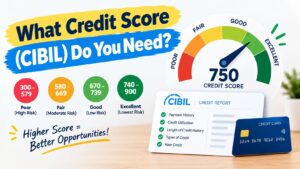
In India, banks will check your CIBIL score when you apply for a credit card. It’s a 3-digit number between 300 and 900 that reflects on your repayment history. 750 or higher scores will have high chances of approvals. The score between 700 and 750 may still have chances depending on their income and other factors.
Tips: You can check your CIBIL score through Google Pay and Paytm.
What document is required for video KYC and income proof?
Video KYC (Know Your Customer) is a live video call where the bank officially verifies your identity using a PAN card or other government IDs. For income proof, you may need to submit the salary slips, Form 16 or income tax returns for self-employed applicants.
Note: Aadhar, PAN, passport, driving license, and pay slips, please ensure these documents are scanned and prepared before you apply.
What Is APR, and Why Should You Check It Before Applying?
ARP (Annual Percentage Rate) calculates your yearly borrowing cost on your credit card, including all the interests and fees. Your joining fees and annual fees are not included in the APR. Most of the banks will waive your annual charges when you reach the fixed annual spend.
| Criteria | HDFC Bank | Axis Bank |
| Minimum age | 21 years (65 for self-employed) | 18 years |
| Maximum age | 60 years (salaried) | 70 years |
| Minimum income | Varies by card, from around ₹10,000/month | Around ₹25,000/month |
| KYC method | Branch or digital, depends on card | Video KYC, available 24/7 for cards |
| Typical approval time | 7 – 10 working days | Instant to a few days for pre-approved offers |
Figures vary by card variant and city, always confirm current fees on the issuer’s page before applying.
How Can I Improve Approval Chances?
- Check your CIBIL score before applying for credit cards, and fix any errors you find.
- Apply for a card that matches your salary income.
- Avoid applying to multiple banks within a short period.
- Keep your KYC documents updated and consistent across ID proofs.
FAQs
What documents do I need for applying for a credit card?
You must need a PAN card, Aadhar or passport for address verification, a passport-size photo, and income proof like a salary slip, Form 16 or ITR for self-employed applicants. The requirements vary slightly by bank and card type.
Is a CIBIL score compulsory to get a credit card?
No, but it helps a lot for instant approvals. Most unsecured cards required a CIBIL score of 700 or higher for easy approval. If your score is low, a secured credit card against a fixed deposit is usually still available.
How long will it take to get a credit card after applying?
It will take about 7 to 10 working days for standard applications. Some applications with strong credit scores will get an instant approval. The physical card delivery will add a few more days after approval.
What’s the difference between a secured and unsecured credit card?
A secured card needs an FD (fixed deposit) and initial deposits and you don’t need a good credit score. An unsecured card needs no collateral but requires good credit history and stable income. You will get a higher reward and cash back in unsecured cards.
How can I increase my credit card limit?
You can request a card limit increase through net banking or banking apps or contact customer support. Pay dues on time and avoid late payment. Submit your salary pay slips after an increase in your salary.
Final Thoughts
Applying for a credit card will not be complicated once you know what banks require. First check your CIBIL score, keep your KYC documents prepared and compare joining and annual fees before you apply for a credit card. Whether you choose HDFC, Axis Bank or another bank, a little preparation speeds up your approval. Explore Webse Connect and find the offers for shopping.
Ready to get a card? Pick a card that fits your income and spending expenses, and apply today!